TRA - Scanning for rail infrastructure in early planning
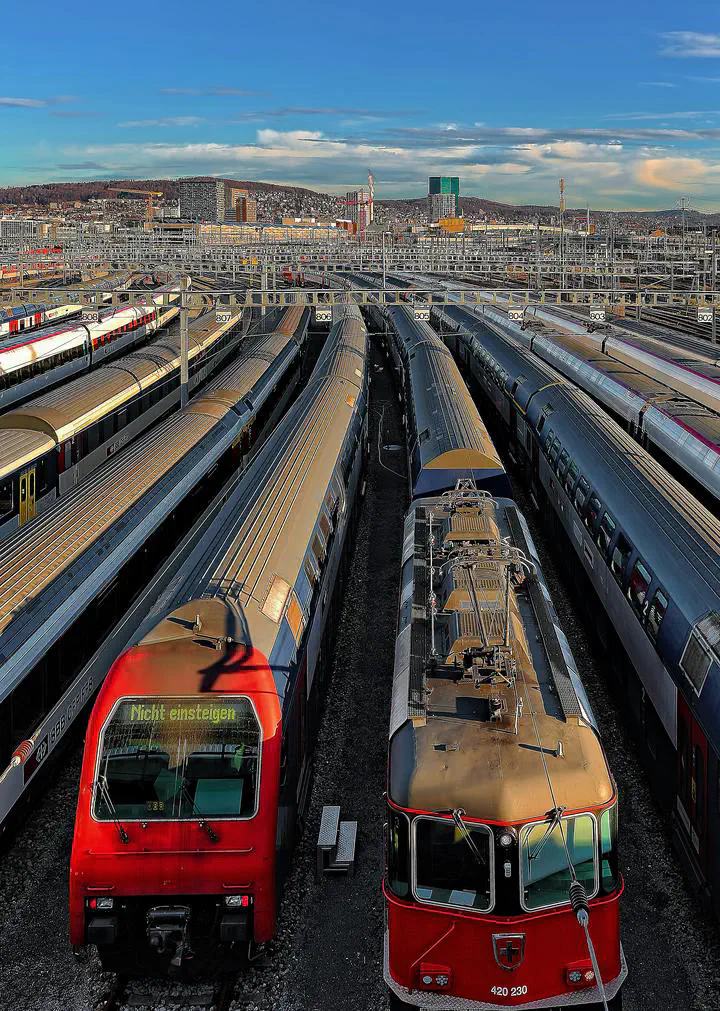 Image credit: Ricardo Gomez Angel SHH
Abstract
This paper presents a scenario planning methodology for early-stage assessment of rail transport infrastructure development considering uncertainty. This supports efforts by planners to balance the needs of diverse stakeholders, e.g., those of commuters, requiring speedy, safe travel, and the environmentally concerned public requiring provision of ecosystem services. This is challenging because of the divergence of stakeholder needs and uncertain future assumptions related to those needs (e.g., spatially explicit uncertainties like population growth and the resulting travel demand). The methodology follows three key steps: generating infrastructure change proposals, creating future scenarios based on societally relevant factors, and evaluating these proposals across multiple scenarios. This approach allows for the net benefit comparison of proposals of different infrastructure types, such as road and rail, to accelerate early-planning stages and streamline stakeholder agreement. The paper includes a proof-of-concept presentation applying the methodology to a Swiss case study involving rail service expansions in the Dübendorf-Hinwil corridor. The approach supports forward-looking infrastructure planning that adapts to evolving societal needs while ensuring long-term sustainability. The paper is concluded with an outlook of future research required to ultimately reach the objective of a multi-type infrastructure development assessment under uncertainty, supporting planning decision-making regardless of infrastructure type.

Arnór Elvarsson
Lecturer / Adjunct professor
Passionate about managing infrastructure, facilitating robust decisions for our built environment considering the uncertain future.